
Introduction to Supplement Management TheSpoonAthletic
Supplement use in modern sports has become a structured science rather than a casual habit. Athletes today focus on precision, timing, and safety instead of random intake. Supplement management thespoonathletic introduces a disciplined framework that helps individuals organize their nutrition support in a way that aligns with training goals, recovery needs, and long-term health balance.
In this approach, supplementation is not treated as a shortcut but as a supportive system. The idea is to strengthen the body’s natural performance capacity through well-planned nutrients. Supplement management thespoonathletic encourages athletes to understand their bodies first, identify deficiencies, and then apply targeted supplements that improve endurance, energy, and post-workout recovery.
Many beginners fail because they copy others instead of building personalized plans. Every athlete has different metabolism, training intensity, and dietary habits. This method highlights awareness, consistency, and science-backed decisions as core principles. By applying this structured approach, athletes can avoid waste, reduce risks, and improve long-term athletic performance safely.
Importance of Evidence-Based Supplement Selection
Choosing supplements without research can lead to poor results or even health risks. Evidence-based selection ensures that every product used has scientific backing and proven effectiveness. Supplement management thespoonathletic focuses on this principle by encouraging athletes to rely on verified studies, expert recommendations, and clinical data rather than marketing claims.
When athletes depend on research-based decisions, they reduce uncertainty. Supplements such as protein, creatine, and omega-3 have strong scientific support for performance enhancement. However, not every product on the market is equally effective or safe. This system teaches users to evaluate ingredients, purity levels, and manufacturing standards before making choices.
Another important factor is individual response. Not all bodies react the same way to supplements. Some athletes may benefit from certain nutrients more than others. Supplement management thespoonathletic promotes monitoring results and adjusting intake based on real performance improvements, recovery speed, and energy levels rather than assumptions.
Key Supplements for Athletic Performance
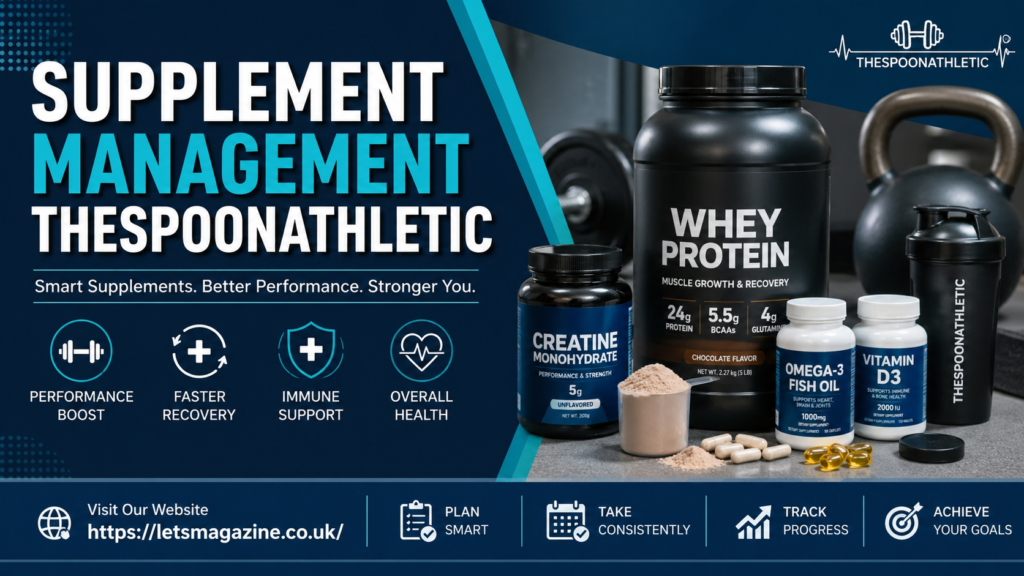
Athletic performance depends on energy production, muscle repair, and recovery efficiency. Several supplements play a vital role in supporting these areas. Creatine is one of the most researched supplements, known for increasing strength and improving short bursts of power. Protein supports muscle rebuilding and helps athletes recover faster after intense workouts.
Omega-3 fatty acids contribute to reduced inflammation and improved joint health, which is essential for long-term training sustainability. Vitamin D3 supports immunity and bone strength, especially for athletes who train indoors or have limited sun exposure. Electrolytes help maintain hydration balance, preventing fatigue and cramping during performance.
Supplement management thespoonathletic emphasizes that these supplements should not be used randomly. Instead, they must be included based on training intensity, dietary gaps, and individual health needs. Proper selection ensures athletes gain maximum benefit without overloading their systems with unnecessary nutrients.
Timing and Dosage Strategies for Maximum Results
Timing plays a critical role in supplement effectiveness. Even the best supplement can fail to deliver results if taken at the wrong time. Pre-workout supplements are designed to increase energy and focus, while post-workout supplements support recovery and muscle repair. Understanding this timing cycle is essential for athletic success.
Dosage is equally important. Taking more than required does not always mean better results. In fact, excessive intake can lead to side effects or reduced absorption efficiency. Minerals such as calcium, magnesium, and zinc should be carefully spaced to avoid competition during absorption in the body.
Supplement management thespoonathletic teaches structured timing schedules based on training routines. Athletes are encouraged to align their intake with workout intensity, rest periods, and nutritional meals. This approach ensures that each supplement works at its highest potential, supporting energy levels and long-term physical improvement.
Supplement Safety and Quality Control
Safety is a major concern in the supplement industry due to the presence of unregulated or low-quality products. Athletes must be extremely careful when selecting supplements because contamination or misleading labeling can affect health and performance. Certified and tested products are always the safest option.
Quality control involves checking manufacturing standards, ingredient transparency, and third-party testing. Supplements that are not properly regulated may contain harmful substances or incorrect dosages. This can negatively impact athletic performance and even cause long-term health issues.
Supplement management thespoonathletic places strong emphasis on safety awareness. Athletes are encouraged to consult professionals such as dietitians or sports doctors before starting any supplement plan. This reduces risks and ensures that every product used contributes positively to physical development and recovery.
Supplement Management System TheSpoonAthletic Approach
The structured system behind supplement management thespoonathletic is designed to bring order and clarity to athletic nutrition. Instead of using supplements randomly, athletes follow a planned schedule based on their goals. This includes strength building, endurance improvement, fat loss, or recovery optimization.
The system also focuses on personalization. Each athlete has unique requirements depending on their sport, age, and training intensity. By analyzing these factors, a customized supplement plan can be created. This ensures that the body receives exactly what it needs without unnecessary excess.
Tracking progress is another essential part of this system. Athletes observe changes in energy, performance, and recovery over time. Adjustments are made accordingly to improve results. Supplement management thespoonathletic becomes a dynamic system that evolves with the athlete’s growth and physical demands.
Nutrition vs Supplementation Balance
A strong foundation of nutrition is always more important than supplements. Whole foods provide essential vitamins, minerals, and energy that cannot be fully replaced. Supplements are designed only to fill gaps where diet alone may not be sufficient.
Balanced nutrition includes proteins, carbohydrates, healthy fats, fruits, and vegetables. These provide natural energy and support overall body function. Supplements enhance this foundation by offering targeted support for performance and recovery needs.
Supplement management thespoonathletic strongly promotes the idea that supplements should never replace meals. Instead, they should complement a well-structured diet. This balance ensures long-term health, improved athletic output, and reduced dependency on artificial support systems.
Common Mistakes in Supplement Management
Many athletes make mistakes that reduce the effectiveness of their supplement routines. One of the most common errors is overuse. Taking multiple supplements without understanding their interaction can lead to imbalance and reduced absorption.
Another mistake is inconsistency. Supplements require regular intake over time to show results. Skipping doses or changing products frequently disrupts progress. Lack of patience often leads athletes to abandon effective plans too early.
Supplement management thespoonathletic highlights the importance of discipline and education. Athletes must understand what they are consuming, why they are taking it, and how it affects their body. Without this awareness, even the best supplements may fail to deliver meaningful results.
Benefits of Proper Supplement Management
Proper supplement planning offers numerous benefits for athletes. One of the most important advantages is improved performance. With the right nutrients, the body generates more energy and maintains endurance for longer periods during training or competition.
Recovery speed is another major benefit. Muscles repair faster, soreness reduces, and athletes can return to training more efficiently. This leads to consistent progress and reduced injury risk over time.
Supplement management thespoonathletic also contributes to better mental focus and immune strength. Athletes feel more energized, stable, and prepared for physical challenges. A well-structured supplement system supports both physical and mental performance.
Conclusion
Supplementation is a powerful tool when used correctly and responsibly. It should always be guided by science, structure, and personal needs rather than trends or assumptions. A disciplined approach ensures safety, effectiveness, and long-term athletic development.
Supplement management thespoonathletic provides a clear pathway for athletes who want to optimize performance without compromising health. By combining proper nutrition, smart supplementation, and consistent tracking, athletes can achieve balanced growth and sustainable results.
Success in sports is not only about hard training but also about intelligent recovery and nutrition planning. When supplements are managed correctly, they become a strong support system that enhances every aspect of athletic performance.
FAQs
What is supplement management thespoonathletic?
It is a structured system that helps athletes organize and optimize supplement intake based on performance, recovery, and health goals using science-based principles.
Which supplements are best for athletes?
Common effective supplements include creatine, protein, omega-3 fatty acids, vitamin D3, and electrolytes depending on individual needs and training intensity.
Is it safe to take supplements daily?
Yes, but only when used in correct dosage and under proper guidance. Overuse or incorrect combinations may lead to health issues.
Can supplements replace a healthy diet?
No, supplements cannot replace whole foods. They are designed only to support nutrition by filling specific dietary gaps.
What is the best time to take supplements?
Timing depends on the supplement type. Some are best before workouts for energy, while others are more effective after workouts for recovery.
How do athletes avoid unsafe supplements?
By choosing certified products, checking ingredient labels, and consulting professionals before starting any supplement routine.
Do all athletes need the same supplements?
No, supplement needs vary depending on sport type, training level, body condition, and personal goals.
What makes supplement management thespoonathletic effective?
Its structured, science-based, and personalized approach ensures safe, efficient, and goal-oriented supplement use.