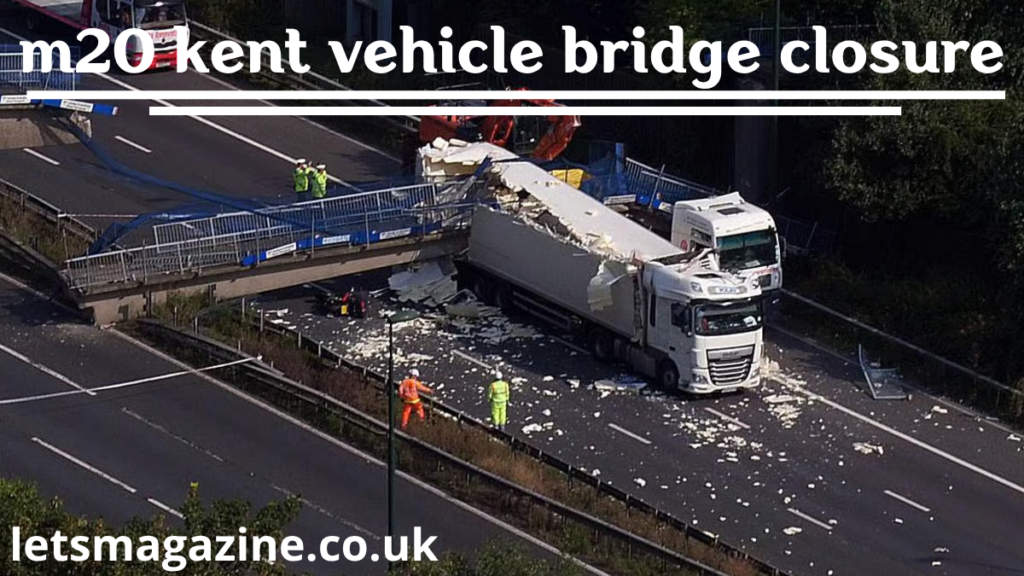

The M20 motorway in Kent is one of the most important transport corridors in southern England, connecting London with Dover and supporting both passenger travel and heavy freight movement. When discussions arise about the M20 Kent Vehicle Bridge Closure, it often refers to temporary shutdowns caused by accidents, emergency maintenance, or structural safety concerns affecting bridges along the motorway network. These disruptions can significantly impact travel flow and logistics across the region.
In recent years, the M20 has experienced several sudden closures that have created widespread traffic delays and confusion among commuters. The M20 Kent Vehicle Bridge Closure has become a highly searched topic due to repeated incidents involving bridge damage, vehicle collisions, and emergency repair operations. Understanding these closures is essential for drivers, businesses, and transport planners who rely on this route daily.
Overview of M20 Motorway and Its Strategic Importance
The M20 motorway plays a crucial role in connecting London to the southeastern coastal ports, especially Dover, which is a major gateway for international trade. Thousands of vehicles, including freight trucks, passenger cars, and public transport, use this route daily. Because of this heavy usage, even a short disruption can cause widespread congestion and delays across Kent and surrounding regions.
When a M20 Kent Vehicle Bridge Closure occurs, it affects not just local travel but also international supply chains. Goods transported between the UK and mainland Europe are often delayed, impacting delivery schedules and business operations. This makes the M20 one of the most sensitive motorways in terms of infrastructure reliability and traffic stability.
Recent Updates on M20 Kent Vehicle Bridge Closure (2025–2026)
Recent years have seen multiple incidents that triggered the M20 Kent Vehicle Bridge Closure, including serious road accidents and emergency bridge inspections. Some closures have been short-term, lasting only a few hours, while others have required longer repair operations due to structural damage concerns. Authorities continue to monitor vulnerable sections closely.
In 2026, traffic management teams have improved monitoring systems to reduce response time during emergencies. Despite these improvements, the M20 Kent Vehicle Bridge remains a recurring issue during peak travel periods or unexpected incidents. Drivers are strongly advised to stay updated through live traffic alerts and official highway updates before planning journeys.
Major Causes Behind M20 Kent Vehicle Bridge Closure
One of the main causes of the M20 Kent Vehicle Bridge Closure is road traffic accidents involving heavy vehicles or agricultural machinery. These incidents sometimes lead to vehicles falling from overbridges or colliding with structural supports, requiring immediate shutdowns for safety inspections and emergency response operations.
Another major factor includes planned or unplanned structural repairs on bridges spanning the motorway. Over time, wear and tear, combined with heavy traffic loads, create risks that must be addressed through maintenance work. Weather conditions, such as heavy rain or strong winds, can also contribute to the need for precautionary closures.
Traffic Disruptions and Driver Impact
The M20 Kent Vehicle Bridge Closure often leads to severe traffic congestion across Kent, especially near major junctions such as Maidstone, Swanley, and Ashford. Commuters frequently experience long delays as vehicles are redirected through alternative routes that are not designed for high traffic volume.
Freight transportation is particularly affected, as delivery schedules and logistics chains depend heavily on uninterrupted motorway access. When a M20 Kent Vehicle Bridge Closure occurs, businesses often face increased operational costs due to delays, fuel consumption, and missed deadlines. This highlights the motorway’s critical role in regional and national transportation networks.
Diversion Routes and Alternative Travel Options
During a M20 Kent Vehicle Bridge Closure, traffic authorities typically activate diversion routes using nearby A-roads and connecting motorways such as the M25 and M2. These alternative routes are designed to manage traffic flow, although they can become heavily congested during peak periods.
Drivers are advised to plan ahead and allow extra travel time when closures are reported. Public transport options, including trains from Kent to London, may offer a more reliable alternative during major disruptions. Staying informed about route changes is essential to avoiding unnecessary delays during a M20 Kent Vehicle Bridge Closure.
Operation Brock and Traffic Management System
Operation Brock is a traffic management system used during major disruptions on the M20 motorway. It is designed to control freight traffic heading to and from the Port of Dover, especially during periods of congestion or emergency closures. The system uses a contraflow arrangement to keep traffic moving.
When a M20 Kent Vehicle Bridge Closure is in place, Operation Brock helps reduce pressure on surrounding roads by organizing lanes efficiently. Although it is effective in managing congestion, it can still cause delays for drivers due to reduced speed limits and restricted lane access. Its main goal is safety and traffic stabilization.
Safety Measures and Highway Authority Response
Highway authorities play a critical role during a M20 Kent Vehicle Bridge Closure by ensuring the safety of drivers and workers on the scene. Emergency teams are deployed quickly to assess structural damage, clear accident sites, and reopen roads as soon as it is safe to do so.
Drivers are encouraged to follow official instructions and avoid restricted areas during closures. Ignoring safety warnings during a M20 Kent Vehicle Bridge Closure can increase the risk of secondary accidents and further delays. Public awareness and cooperation are essential for maintaining road safety during such incidents.
Economic Impact of M20 Closures
The economic impact of a M20 Kent Vehicle Bridge Closure is significant, particularly for industries reliant on timely deliveries. Delays in freight movement can disrupt supply chains, increase costs, and reduce efficiency for businesses operating between the UK and Europe.
Local economies in Kent also feel the effects, as reduced accessibility can affect tourism, retail activity, and daily commuting patterns. Over time, repeated closures may lead to increased investment in infrastructure improvements to reduce long-term disruption risks associated with the M20 Kent Vehicle Bridge .
Future Infrastructure Developments and Improvements
Authorities are continuously working on improving the resilience of the M20 motorway through infrastructure upgrades and advanced monitoring systems. These developments aim to reduce the frequency and severity of the M20 Kent Vehicle Bridge Closure by identifying risks earlier and responding more efficiently.
Future plans include stronger bridge designs, better traffic management technologies, and expanded emergency response capabilities. These improvements are expected to enhance safety and reduce long-term disruption, ensuring smoother traffic flow even during unexpected incidents.
Driver Advice and Travel Preparation Tips
Drivers using the M20 motorway are advised to regularly check traffic updates before starting their journey, especially during peak travel seasons. Being aware of potential M20 Kent Vehicle Bridge Closure alerts can help avoid unexpected delays and route changes.
It is also recommended to use navigation apps that provide real-time traffic information. Planning alternative routes in advance can significantly reduce travel stress during closures. Preparedness is key to managing disruptions effectively and ensuring safer travel conditions.
Conclusion
The M20 motorway remains one of the most important transport routes in the UK, but it is also vulnerable to disruptions such as the M20 Kent Vehicle Bridge Closure. These closures can occur due to accidents, maintenance work, or emergency safety measures, affecting both local and international travel.
Understanding the causes, impacts, and management strategies behind these closures helps drivers and businesses prepare more effectively. With ongoing infrastructure improvements and better traffic management systems, the goal is to reduce disruptions and improve safety across the M20 network in the future.
FAQs
What is the M20 Kent Vehicle Bridge Closure?
It refers to temporary or emergency closures on the M20 motorway caused by accidents, bridge damage, or maintenance work affecting traffic flow.
Why does the M20 close so often?
Closures often happen due to high traffic volume, accidents involving heavy vehicles, and necessary structural repairs on bridges.
How long do M20 closures usually last?
The duration varies depending on the severity of the incident, ranging from a few hours to several days in serious cases.
What is Operation Brock on the M20?
Operation Brock is a traffic management system used to control congestion during major disruptions and maintain freight movement.
How can drivers avoid delays during closures?
Drivers should check live traffic updates, use alternative routes, and plan extra travel time during peak periods.
Which areas are most affected by M20 closures?
Areas around Maidstone, Swanley, and Ashford are commonly affected due to their proximity to key junctions.
Is the M20 Kent Vehicle Bridge Closure permanent?
No, most closures are temporary and are resolved once safety checks or repairs are completed.